Besser atmen.
Mehr leisten.
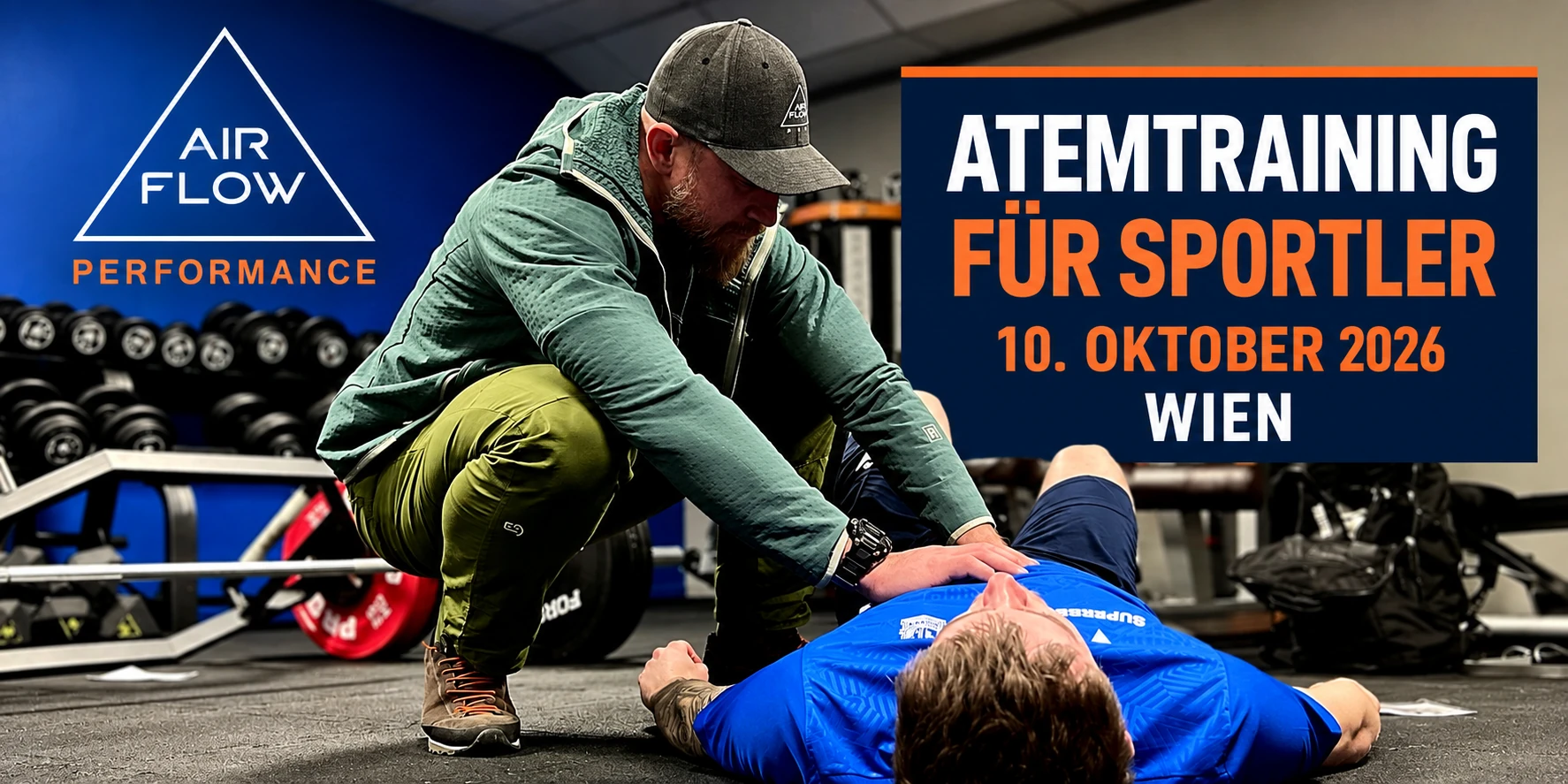
Entdecke an einem kompakten Workshoptag, wie Atmung sportliche Leistung, Konzentration und Regeneration beeinflusst – verständlich erklärt und direkt in praktischen Übungen erlebbar.
Programm
Ein kompakter Einstieg in Air Flow Performance: Du lernst die wichtigsten Grundlagen der Atmung im Sport kennen und setzt ausgewählte Methoden direkt praktisch um.
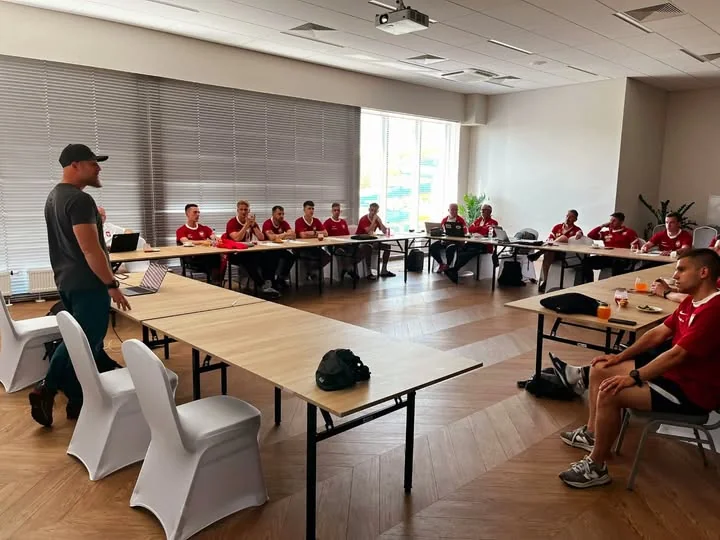
Theoretischer Teil
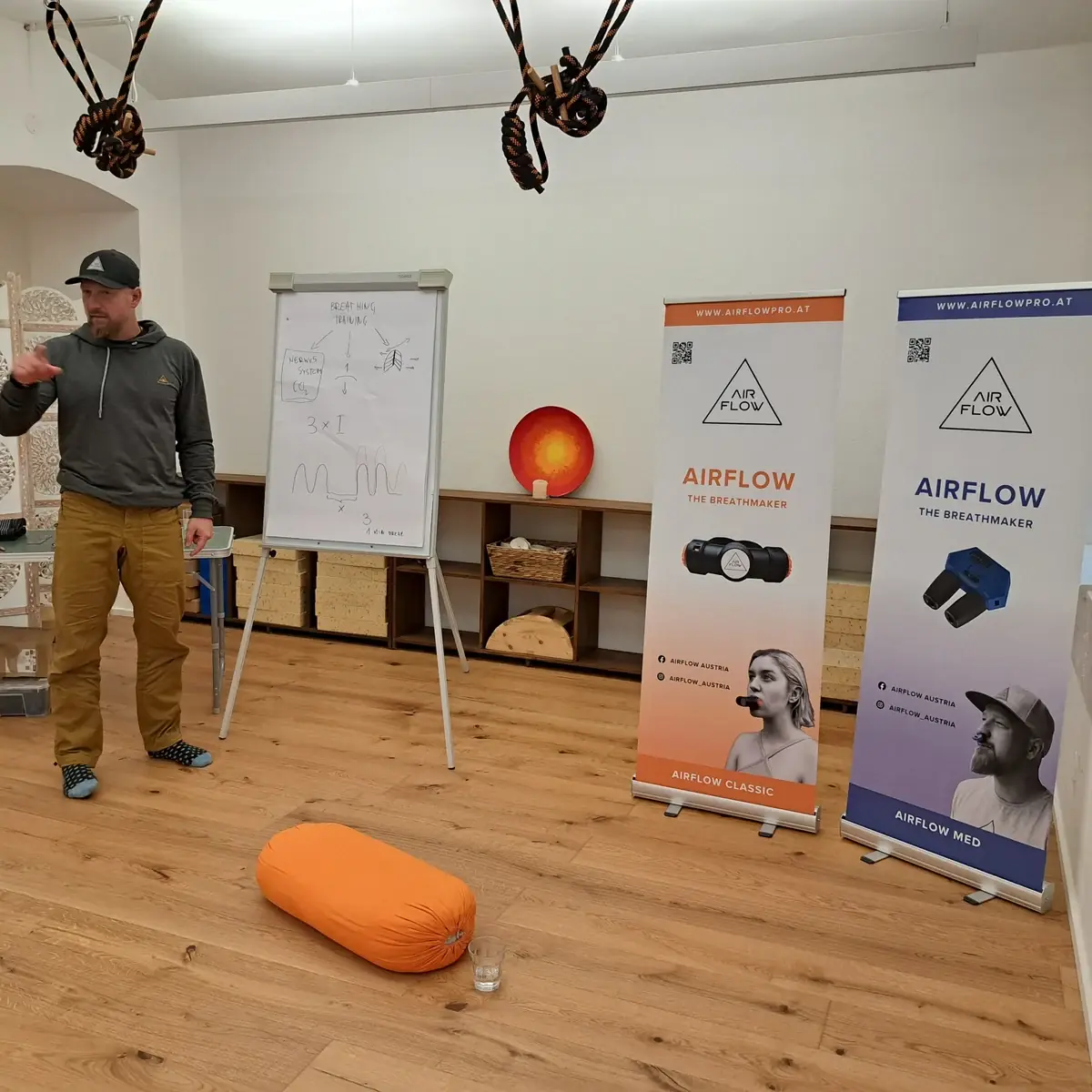
- Einführung in das Air Flow Performance Modell
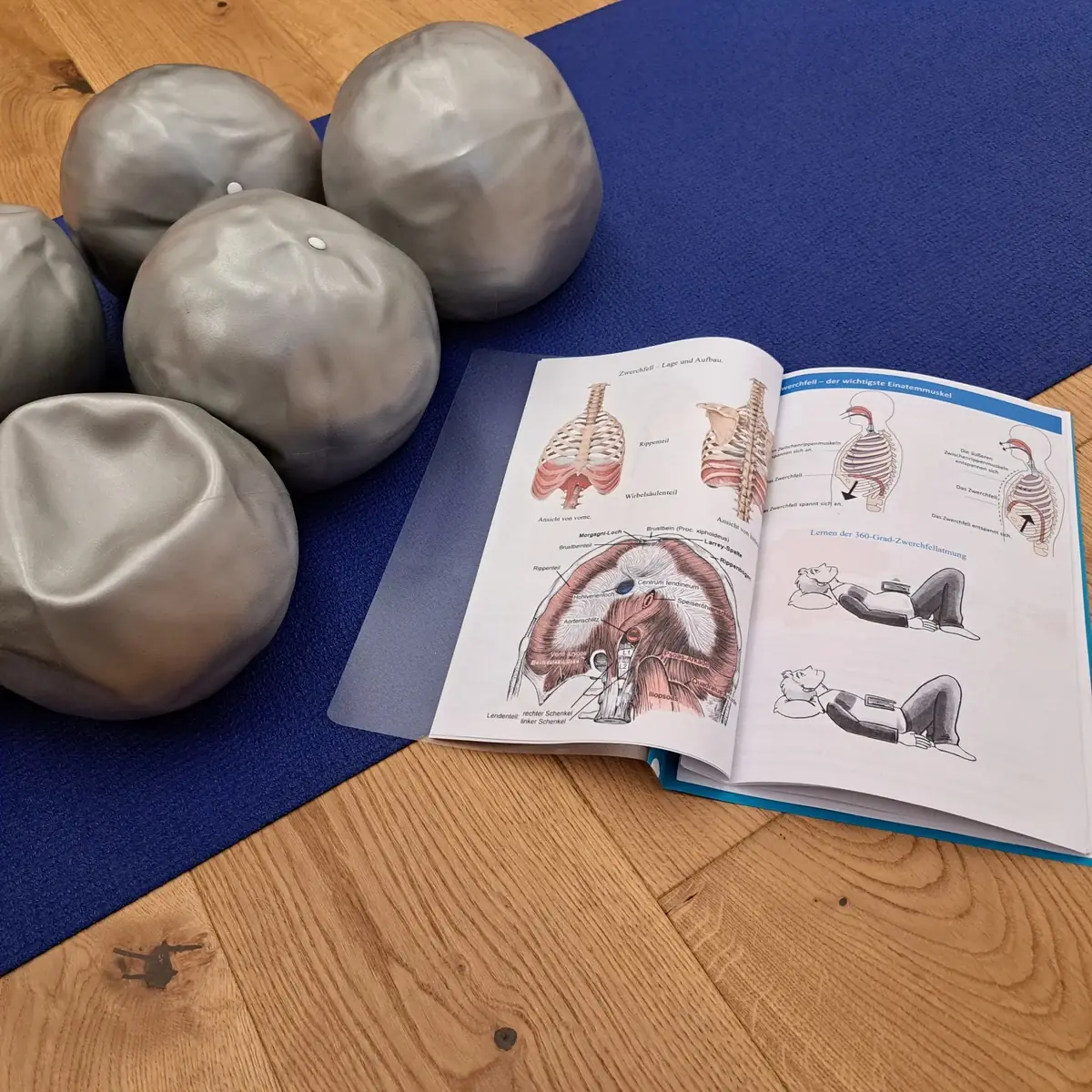
- Grundlagen von Atemmuster, Zwerchfell und 360°-Atmung
- Warum CO₂-Toleranz und Atemkontrolle unter Belastung wichtig sind
- Zusammenspiel von Biomechanik, Biochemie und Nervensystem
- Grundprinzipien von Hypoxie, Hyperkapnie und Atemwiderstandstraining
- Wie Atemübungen sinnvoll in die eigene Sportart integriert werden
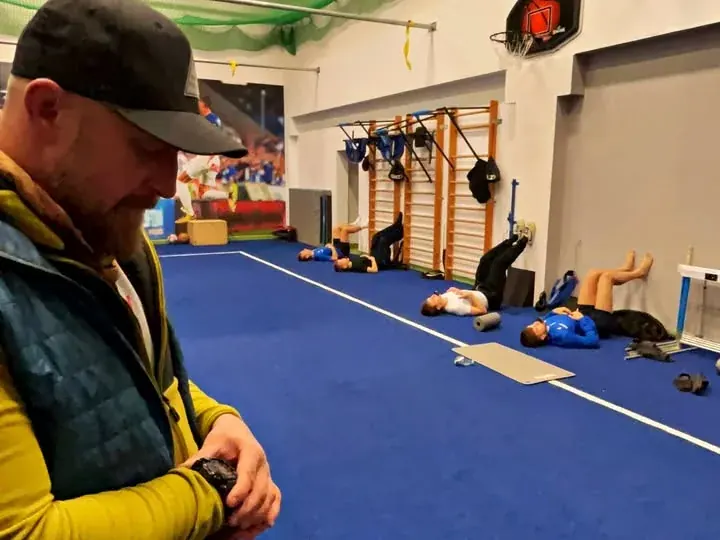
Praktischer Teil
- Einfache Beurteilung des eigenen Atemmusters
- Übungen für Brustkorb, Zwerchfell und Atemwahrnehmung
- Ausgewählte Übungen zur Atemmuskulatur und CO₂-Toleranz
- Atmung mit Bewegung und sportlicher Belastung verbinden
- Atemstrategien für Konzentration und Regeneration kennenlernen
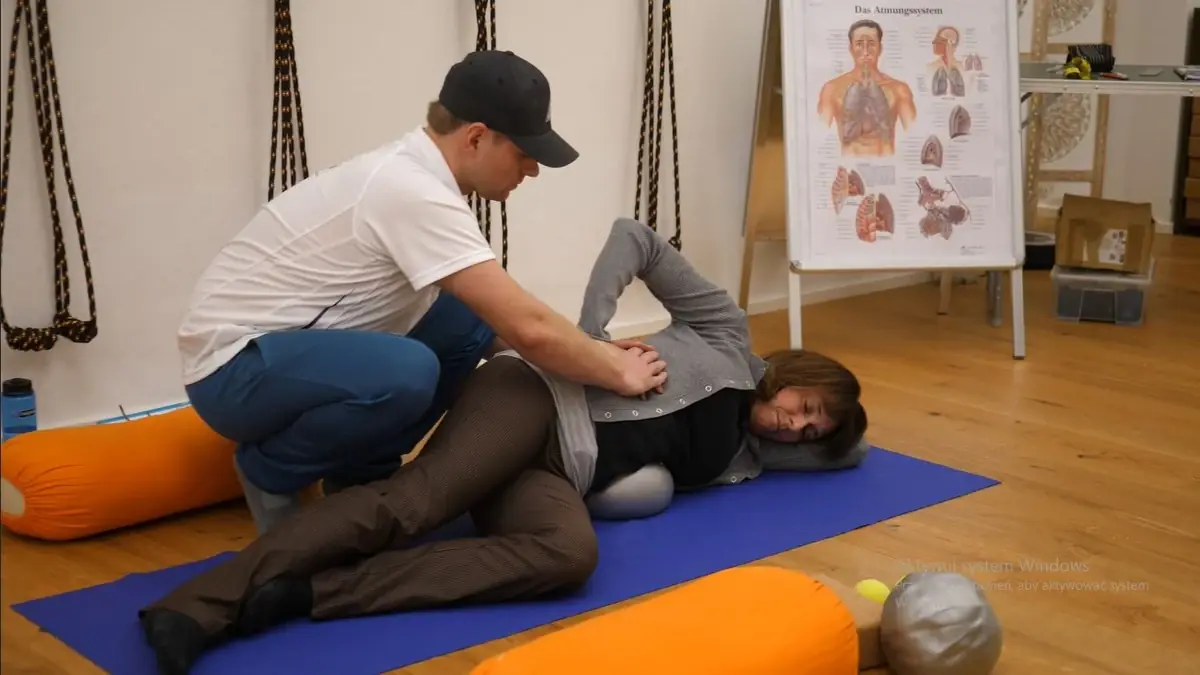
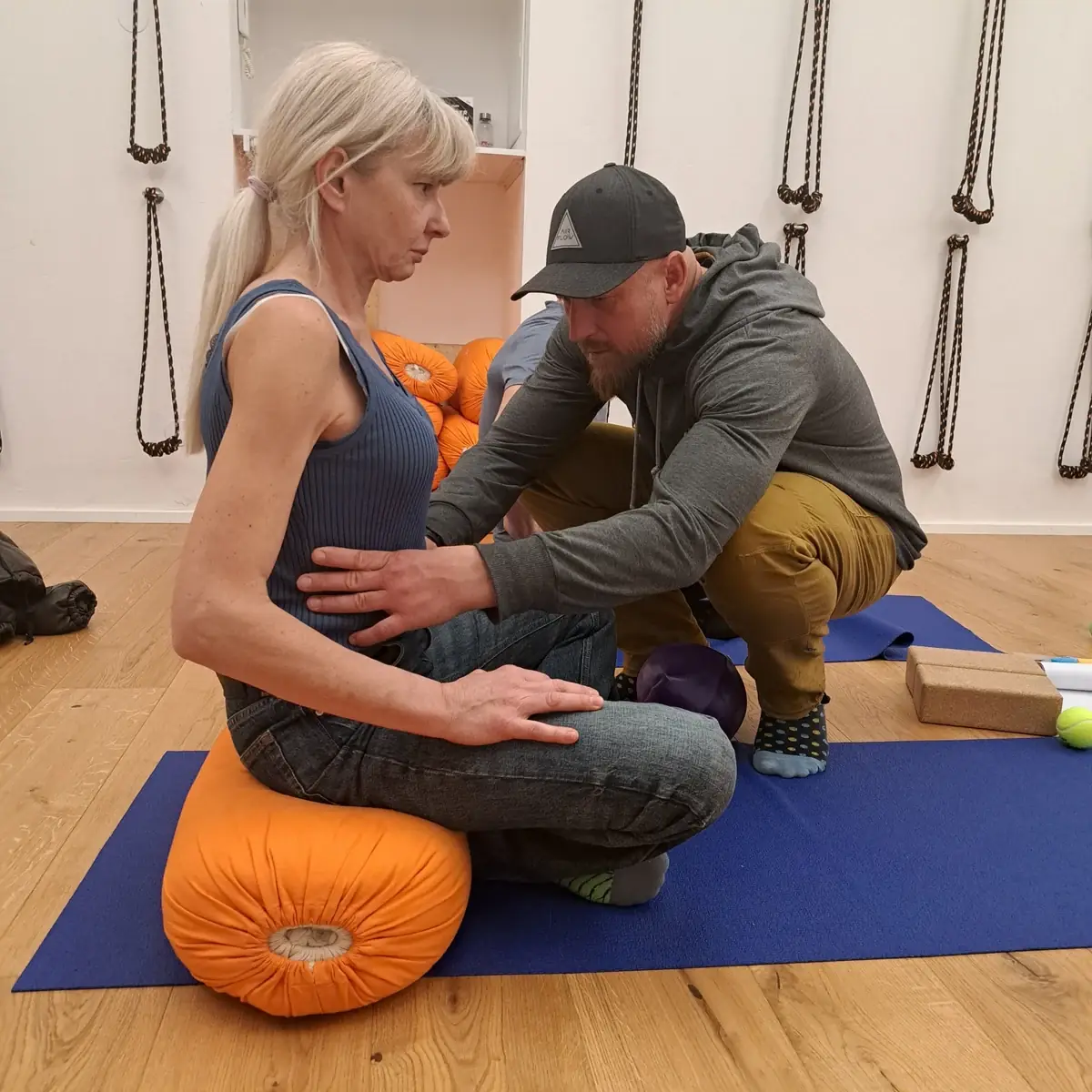
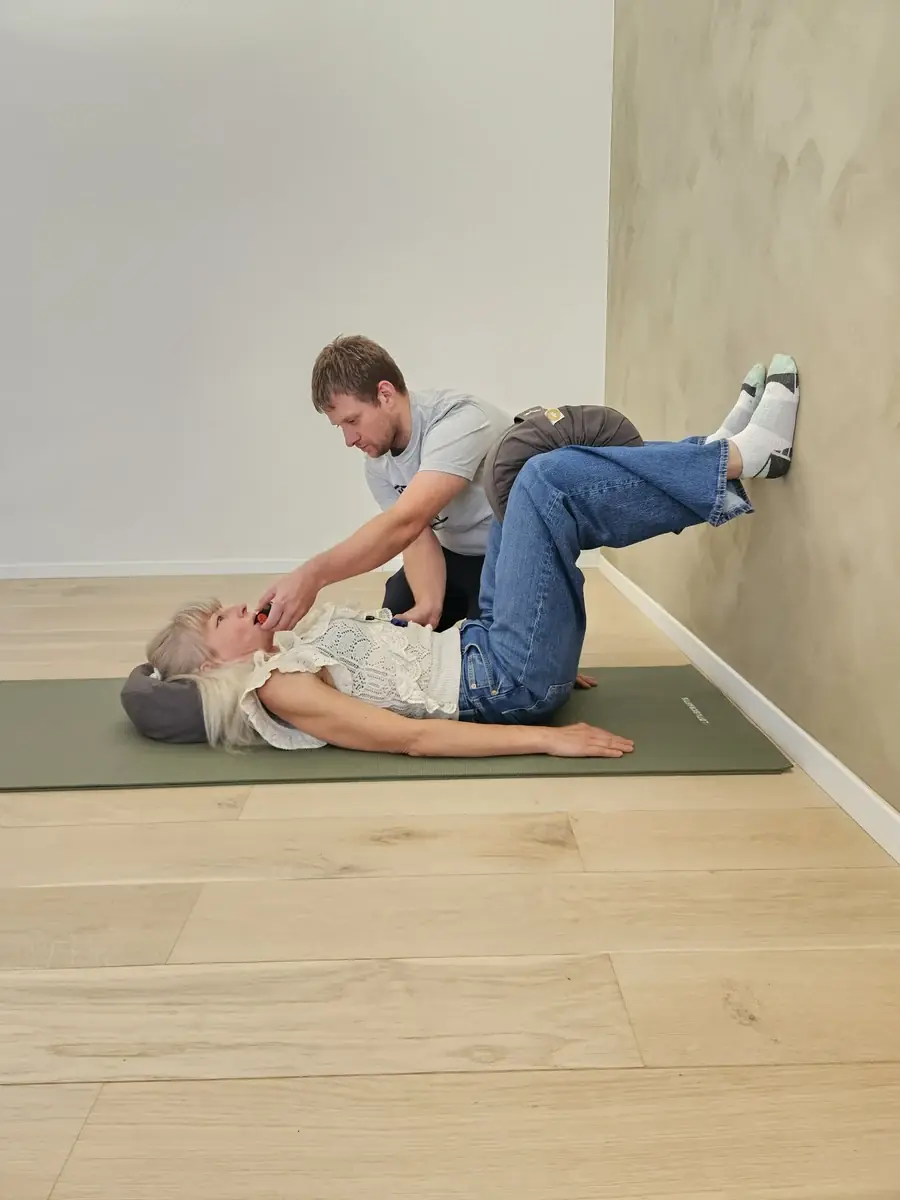
- Praktische Anwendung mit Einzelarbeit, Partnerfeedback und Korrekturen
Dein Einstieg in Atemtraining im Sport
Der Tag gibt dir einen verständlichen Überblick über das Air Flow Performance Modell und erste praktische Werkzeuge für dein eigenes Training. Du lernst, worauf du bei der Atmung achten kannst, wie ausgewählte Übungen aufgebaut werden und welche nächsten Schritte für eine langfristige Entwicklung sinnvoll sind. Der Workshop ersetzt kein vollständiges mehrtägiges Ausbildungsprogramm – er macht die Methode jedoch konkret, erlebbar und direkt anwendbar.
Ein Samstag. Theorie und Praxis.
Der neue kompakte Workshop macht Air Flow Performance zu einem zugänglichen Preis erlebbar: 75 € pro Person für den gesamten Workshoptag.
- Samstag, 10. Oktober 2026 · 10:00–17:00
- Kompakter theoretischer und praktischer Einstieg
- Wasser, Kaffee und Snacks
- Deutschsprachige Erklärungen und persönliche Unterstützung vor Ort
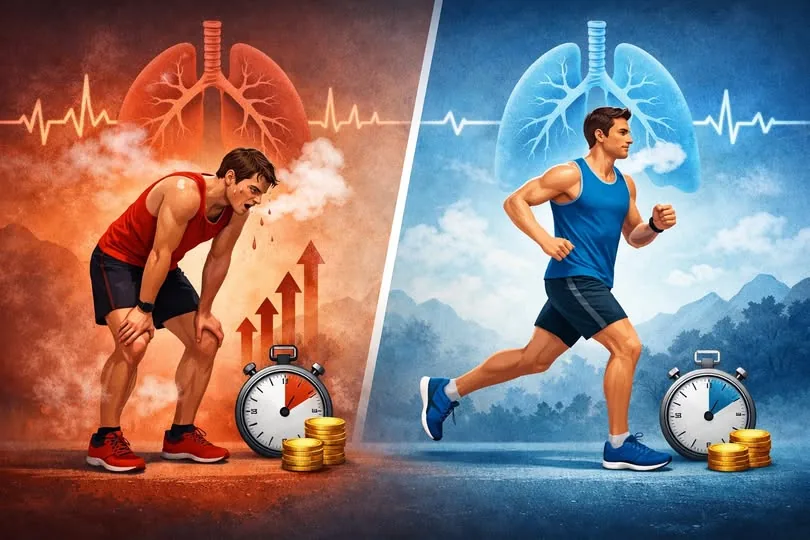
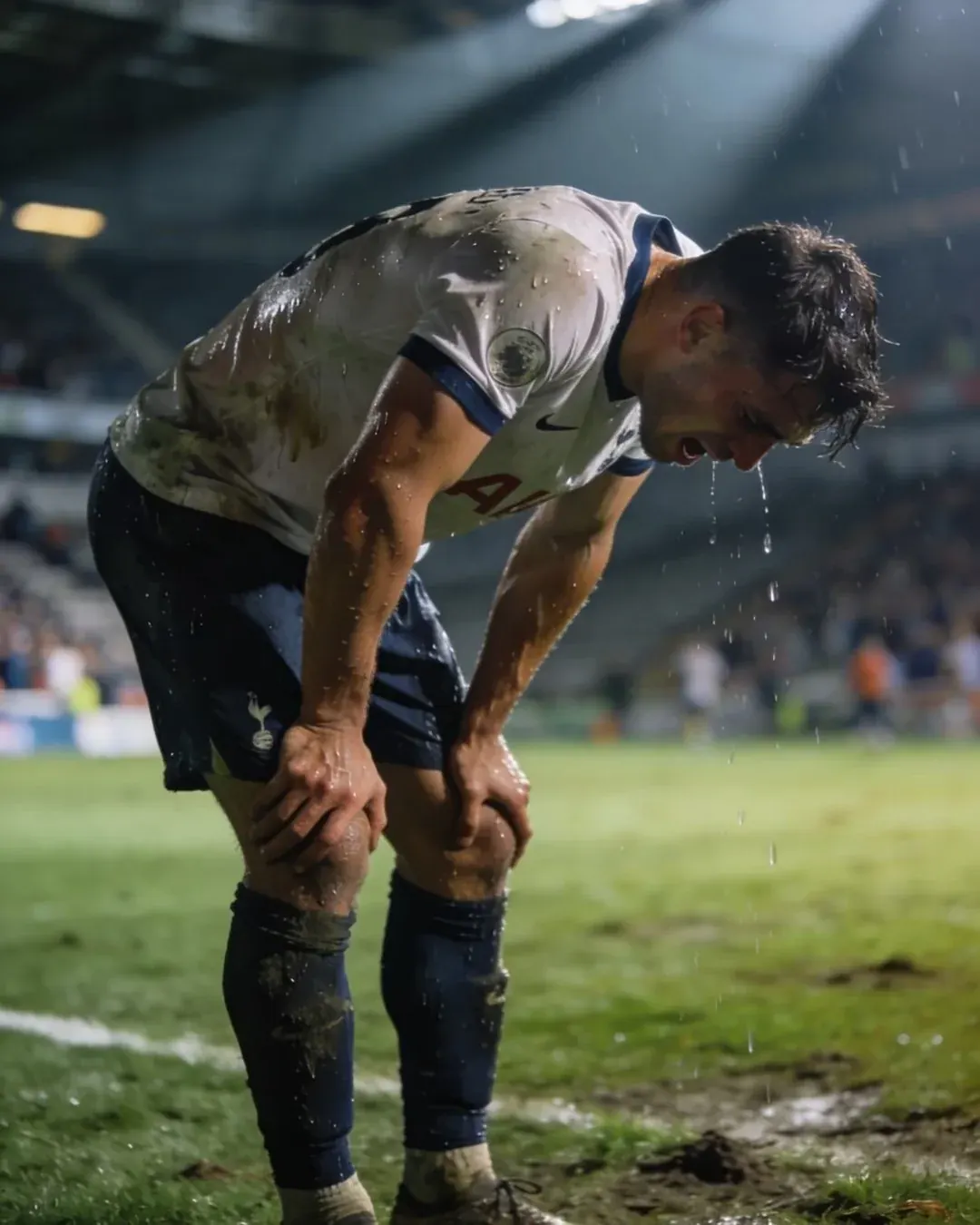
Atmung ist die nächste Grenze sportlicher Leistungsfähigkeit.
Der moderne Sport optimiert GPS-Belastung, Ernährung, Kraft, Regeneration und Taktik. Doch das System, das bei jedem Sprint, jeder Entscheidung und jeder Erholungsphase beteiligt ist, wird noch immer selten gezielt beurteilt: die Atmung.
der untersuchten Wettkampfsportler*innen zeigten biomechanische Anzeichen eines dysfunktionalen Atemmusters.
In der Querschnittsstudie wurden 1.933 Wettkampfsportler*innen mit dem Hi-Lo-Test im Stand untersucht. Das Ergebnis bezieht sich ausdrücklich auf die biomechanische Dimension des Atemmusters – nicht auf eine Atemwegserkrankung.
Maximiere deine sportlichen Parameter und passe deine Atmung an die Belastung an.
Ziel des Workshops ist es, deine sportlichen Leistungsparameter maximal zu steigern, deine Atmung zu optimieren und sie an die Belastung anzupassen.
Der Workshop richtet sich sowohl an Amateure als auch an Profis. Du lernst auf einfache Weise, Atemübungen auszuführen und sie in dein Training einzubauen.
Du lernst praktische Werkzeuge kennen, die deine Atemmuster verbessern können, um die Versorgung und Nutzung von Sauerstoff durch den Körper zu verbessern, denn genau dies ist die häufigste Ursache, die deine Fortschritte blockiert!
Vorteile durch die Anwendung von Atemtraining
Besserer Sauerstofftransport
Besserer Transport von Sauerstoff zu den Organen und zu den arbeitenden Muskeln.
Aerobe und anaerobe Leistungsfähigkeit
Verbesserung der aeroben und anaeroben Leistungsfähigkeit.
VO₂max
Verbesserung der maximalen Sauerstoffaufnahme VO₂max.
Atemmuskulatur
Stärkung der Atemmuskulatur.
Konzentration und Ermüdung
Verbesserung der Konzentration sowie Verringerung und Verzögerung von Ermüdungserscheinungen.
Höhere Laktatschwelle
Erhöhung der Laktatschwelle.
Form trotz Verletzung erhalten
Möglichkeit, die Form bei verletzten Personen aufrechtzuerhalten.
Bessere Atemkontrolle
Bessere Kontrolle der Atmung während körperlicher Belastung sowie im Alltag.
7-wöchiges Pilotprojekt im Profifußball
Kurze tägliche Atemeinheiten wurden in bestehende Warm-ups und Cool-downs integriert, ohne das Trainingsvolumen zu erhöhen. Die offizielle Air Flow Performance Ergebnisseite dokumentiert Veränderungen in Wearable-, GPS- und physiologischen Messwerten.
Zeit in der höchsten Herzfrequenzzone
Dokumentierte Reduktion der Zeit in der höchsten Herzfrequenzzone bei vergleichbaren Trainingsbelastungen.
Regeneration nach Sprintbelastung
Dokumentierte Verbesserung der Zeit bis zur erneuten Belastungsbereitschaft nach Hochgeschwindigkeitsläufen.
Ruheatmungsfrequenz
Dokumentierte Senkung der Ruheatmungsfrequenz bis zum Ende des siebenwöchigen Protokolls.
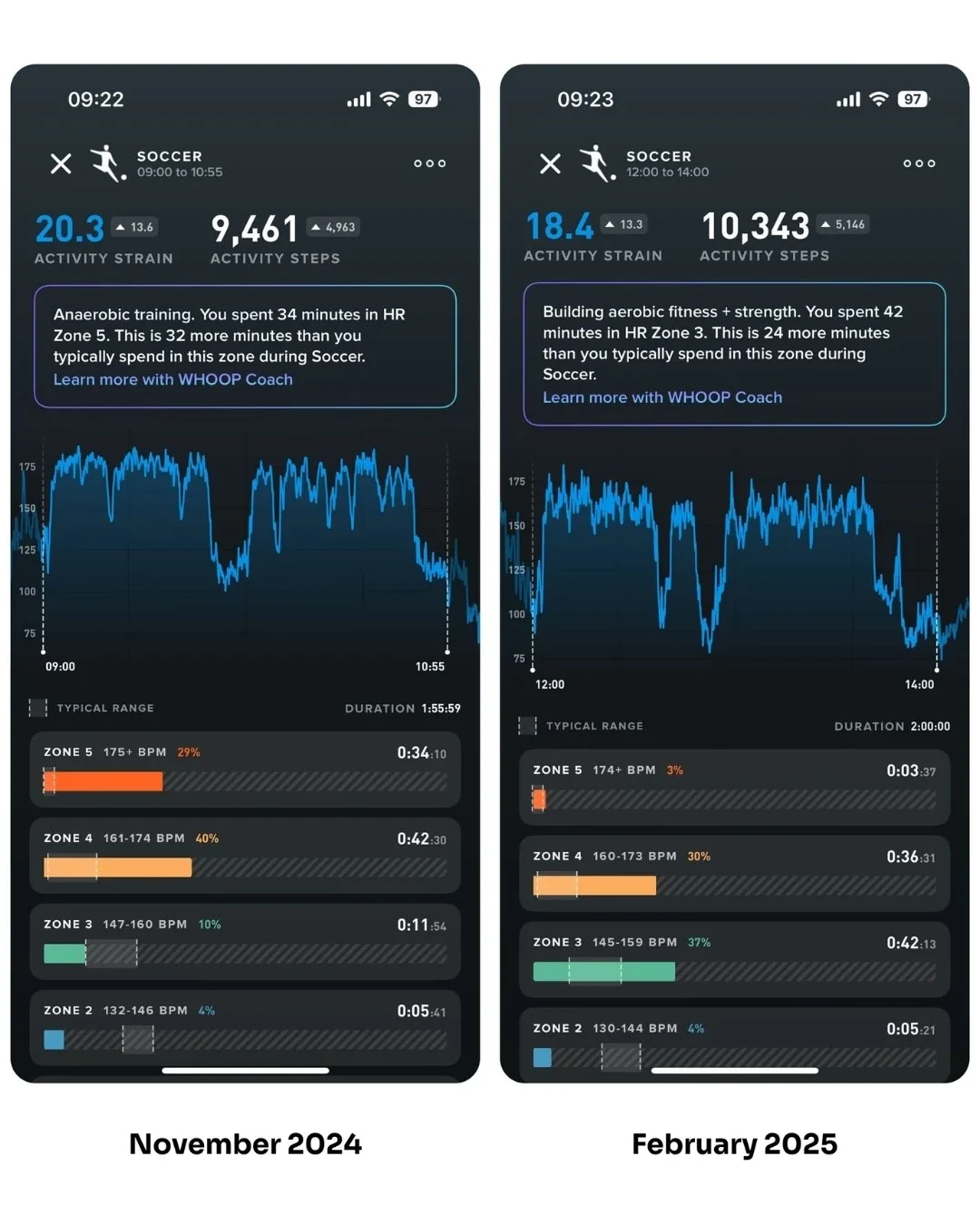
Sieben Wochen messbare Veränderung
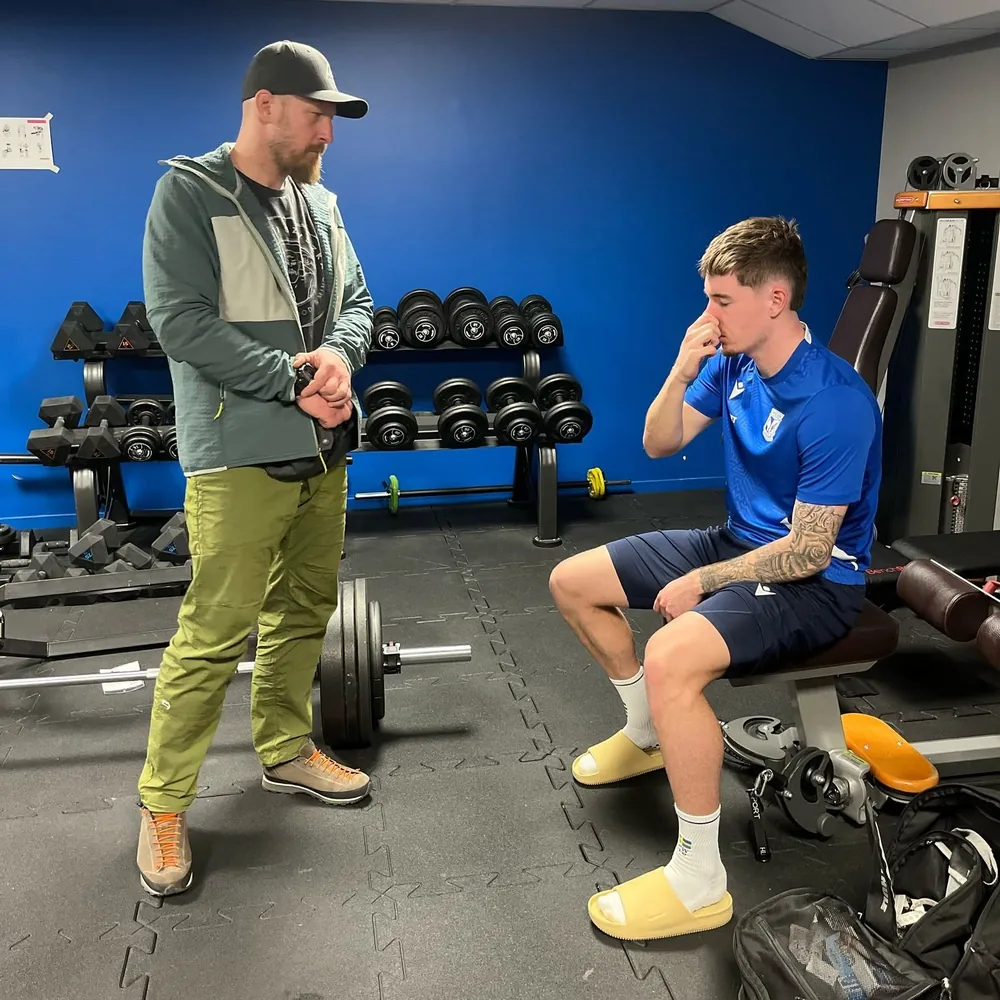
Diese Zahlen beschreiben eine interne Fallstudie mit einer kleinen Pilotgruppe ohne Kontrollgruppe. Sie sind keine garantierten Ergebnisse für jede teilnehmende Person.
Erfahrungen aus dem Profisport
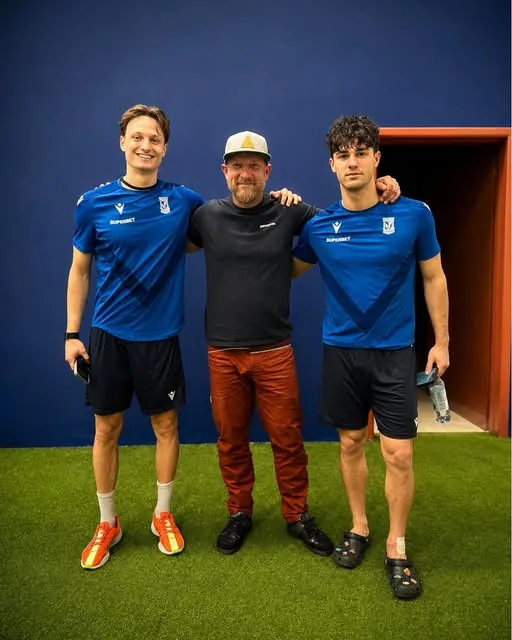
Von Air Flow Performance veröffentlichte Rückmeldungen aus der Arbeit mit Spielern von Lech Poznań.
„Jetzt kann ich länger die Luft anhalten, Atemnot leichter kontrollieren – besonders beim Intervalltraining – und meine Atmung deutlich schneller wieder beruhigen.“Daniel H. Lech Poznań
„Wenn ich erschöpft bin, stütze ich mich nicht mehr mit den Händen auf den Knien ab. Ich beruhige meine Atmung, indem ich so lange wie möglich durch die Nase atme.“Antoni K. Lech Poznań
„Die Einheiten haben meine Schlafqualität deutlich verbessert. Wenn ich die Techniken vor dem Schlafengehen anwende, schlafe ich wesentlich erholsamer.“Kornel L. Lech Poznań
Veröffentlichte Stimmen von Teilnehmer*innen; individuelle Erfahrungen sind keine garantierten Ergebnisse.
Drei Systeme. Eine Leistung.
Drei miteinander verbundene Systeme bestimmen, wie effizient Sportler*innen unter Belastung atmen, ihre Leistung kontrollieren und anschließend regenerieren. Air Flow Performance verbindet diese Bereiche zu einem klaren, praktisch trainierbaren Leistungsmodell.
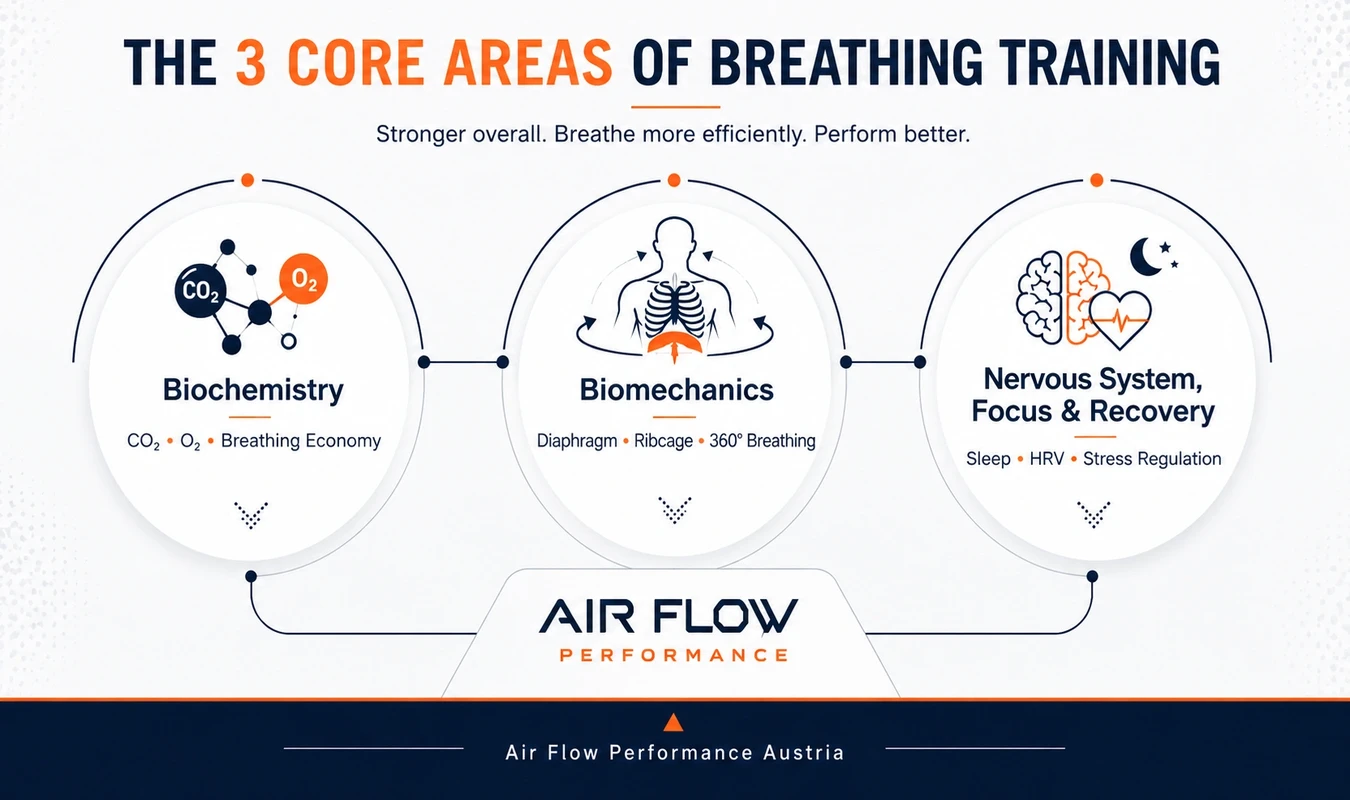
Biochemie, Biomechanik und Nervensystem werden nicht isoliert betrachtet. Im Workshop lernst du, ihre Wechselwirkungen zu erkennen und in sportartspezifische Belastungen zu übertragen.
Die komplette Air Flow Performance Methode: Der Workshop zeigt dir die praktische Anwendung. Die vollständige Methode, Fachartikel und das gesamte Air Flow Performance Projekt findest du auf der Original-Projektseite.
Gesamtes Air Flow Performance Projekt ansehen →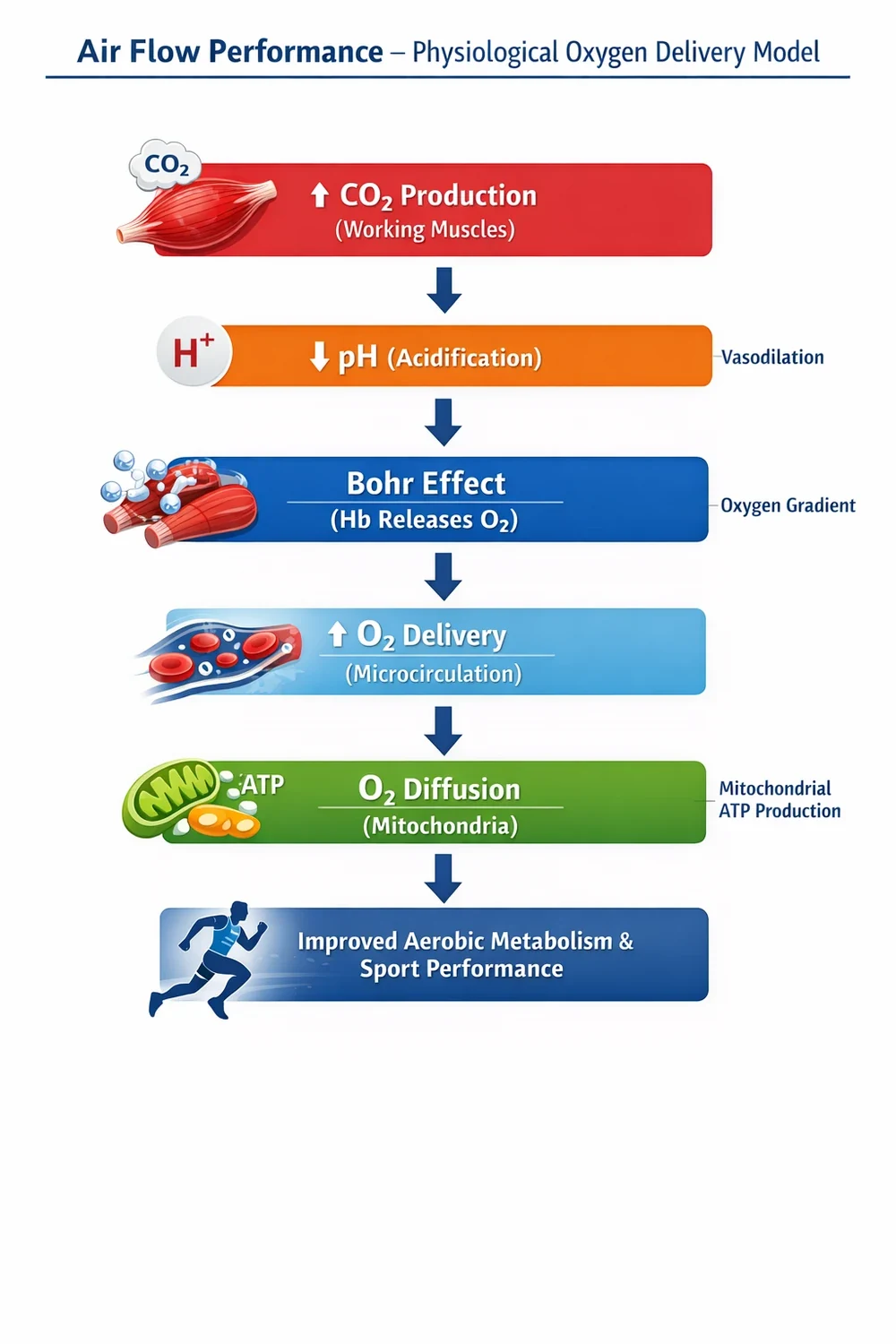
Sauerstoffversorgung bedeutet nicht einfach, mehr zu atmen.
Unter Belastung wirken CO₂-Produktion, pH-Veränderungen, Durchblutung und die Sauerstoffabgabe des Hämoglobins zusammen. Der Workshop erklärt diese Mechanismen verständlich und verbindet sie mit dem Atemverhalten unter Belastung.
Unnötige Überatmung erkennen
Erkenne, wie die Ventilation schneller steigen kann als die tatsächlichen Anforderungen der Belastung.
Den Bohr-Effekt verstehen
Verstehe, warum CO₂ zu den physiologischen Bedingungen gehört, die die Sauerstoffabgabe an arbeitendes Gewebe unterstützen.
Kontrolle trainieren – nicht Panik
Trainiere schrittweise Strategien, um auf Lufthunger und steigende Intensität kontrollierter zu reagieren.
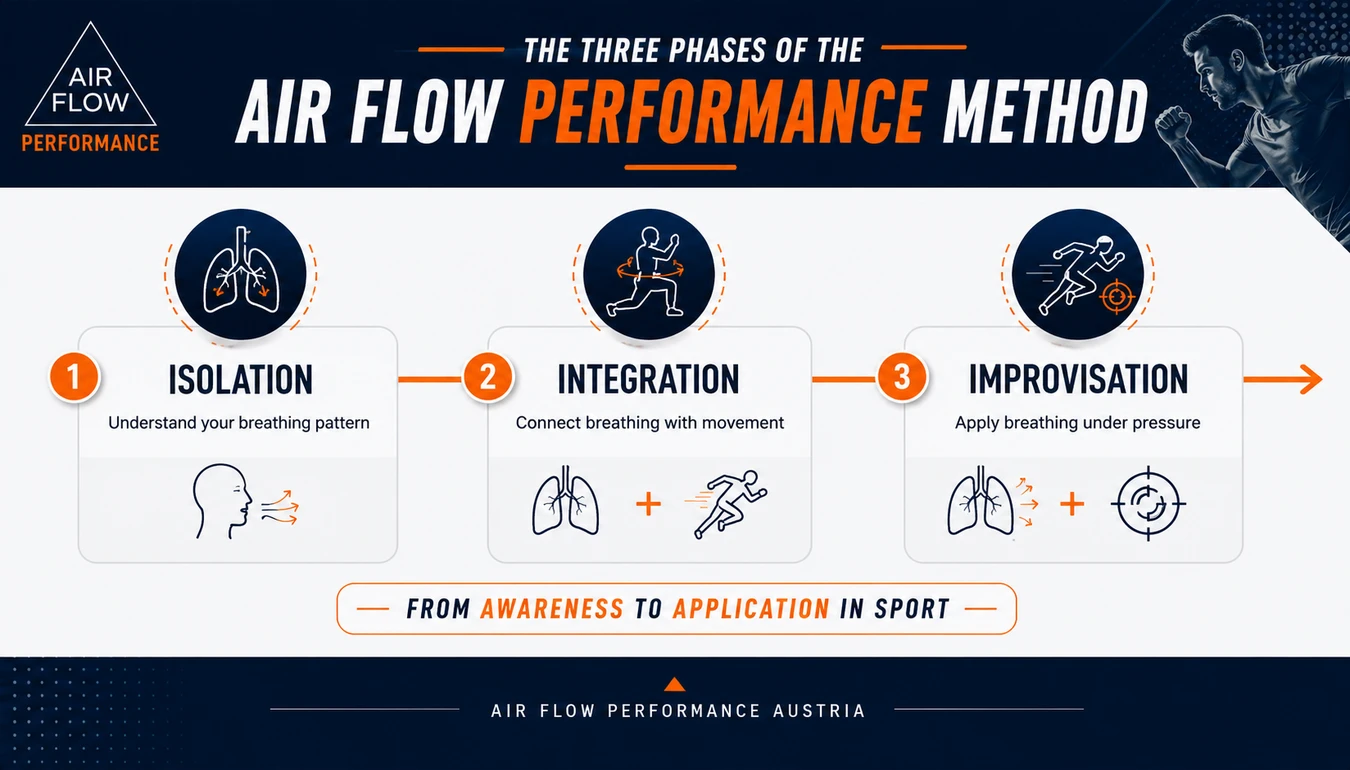
Isolation
Baue die Grundlagen der Atmung in einer kontrollierten Umgebung auf, bevor Geschwindigkeit, Belastung oder Wettkampfdruck hinzukommen.
- Aktuelles Atemmuster beurteilen
- Zwerchfell- und 360°-Brustkorbmechanik entwickeln
- Ruhige Nasenatmung und Ventilationskontrolle trainieren
- CO₂-Wahrnehmung und ruhige Regenerationsatmung einführen
Integration
Verbinde Atmung mit Mobilität, Kraft, Haltung und Bewegung, damit das neue Muster auch unter körperlicher Belastung verfügbar bleibt.
- Atmung mit dynamischer Bewegung synchronisieren
- Druck- und Rumpfkontrolle während Übungen einsetzen
- Nasenatmung bei geeigneten Intensitäten anwenden
- Progressives Atemwiderstandstraining verstehen
Improvisation
Wende Atemstrategien dann an, wenn Ermüdung, Intensität, emotionaler Druck und die Anforderungen an schnelle Regeneration am höchsten sind.
- Atmung bei Ermüdung und Lufthunger kontrollieren
- Fokus und Aktivierungsniveau vor dem Wettkampf regulieren
- Zwischen intensiven Belastungen gezielter regenerieren
- Die Werkzeuge an reale Sportsituationen anpassen
Entdecke die Wissenschaft hinter der Methode
Detaillierte deutschsprachige Fachseiten erklären die Mechanismen, die während des Trainings praktisch eingesetzt werden.
Entwickelt für den Moment, in dem der Druck steigt.
Air Flow Performance geht über isolierte Atemübungen hinaus. Die Methode wird dort angewendet, wo Bewegung, Ermüdung, Entscheidungen und Regeneration tatsächlich zählen.
Erkenne die Atemstrategie, die aktuell in Ruhe und unter Belastung genutzt wird.
Baue Mechanik, Atemkontrolle und Regenerationswerkzeuge schrittweise auf.
Übertrage die Werkzeuge auf Bewegung, Ermüdung und sportartspezifische Anforderungen.
Keine reine Vortragsveranstaltung.
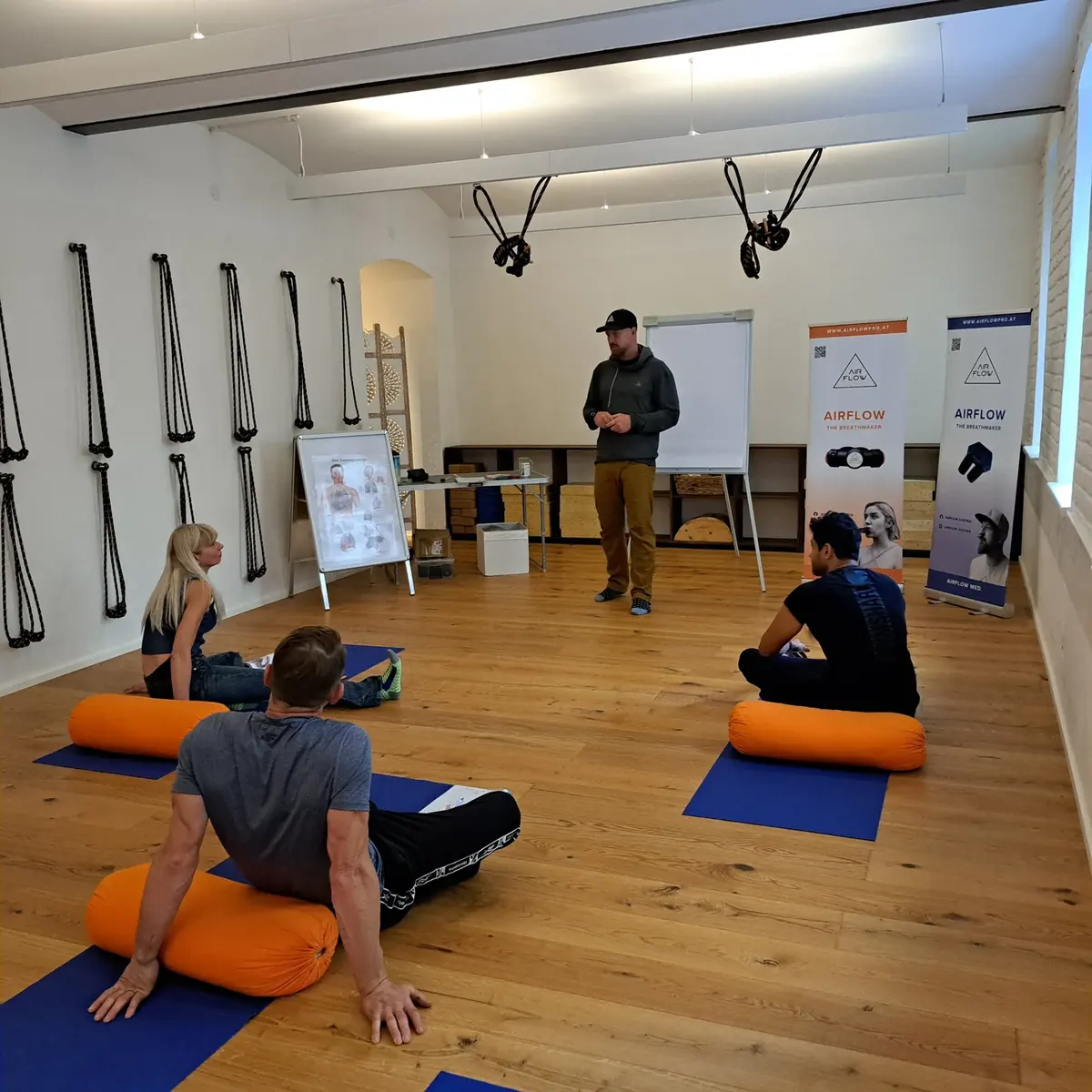
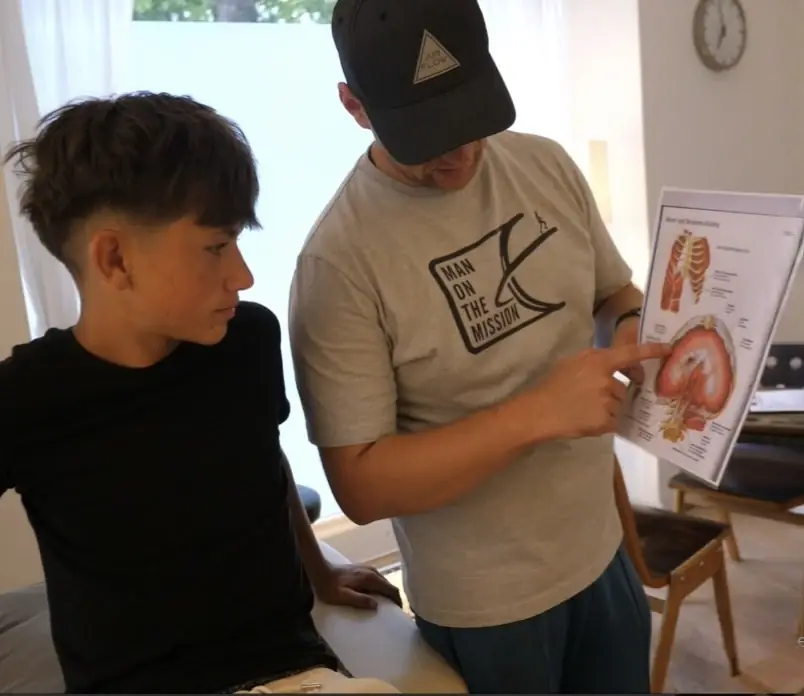
Die Teilnehmer*innen testen, üben und erleben die Übungen durch Einzelarbeit, Partnerfeedback, Bewegungsintegration und praktisches Coaching.
Was du nach dem Workshop mitnimmst
Ein verständlicher Einblick in das System und ausgewählte praktische Werkzeuge, mit denen du nach dem Workshoptag weiterarbeiten kannst.
Eine klarere Einschätzung
Verstehe die wichtigsten Merkmale deines aktuellen Atemmusters und erkenne, wo du beginnen solltest.
Bessere Mechanik
Nutze praktische Werkzeuge für Zwerchfell, untere Rippen, Brustkorbmobilität und 360°-Druck.
Kontrolle unter Belastung
Wende Atemstrategien bei Bewegung, Ermüdung, Intervallen und beim gezielten Zurückkehren in die Ruhe an.
Ein individueller Weiterführungsplan
Erstelle eine individuelle Übungsstruktur für Training, Wettkampf, Schlaf und Regeneration.
AirFlow Classic und AirFlow Med
Die Geräte können demonstriert oder bei ausgewählten Übungen eingesetzt werden, um Widerstand, Luftstrom und Atemkontrolle verständlich zu machen.
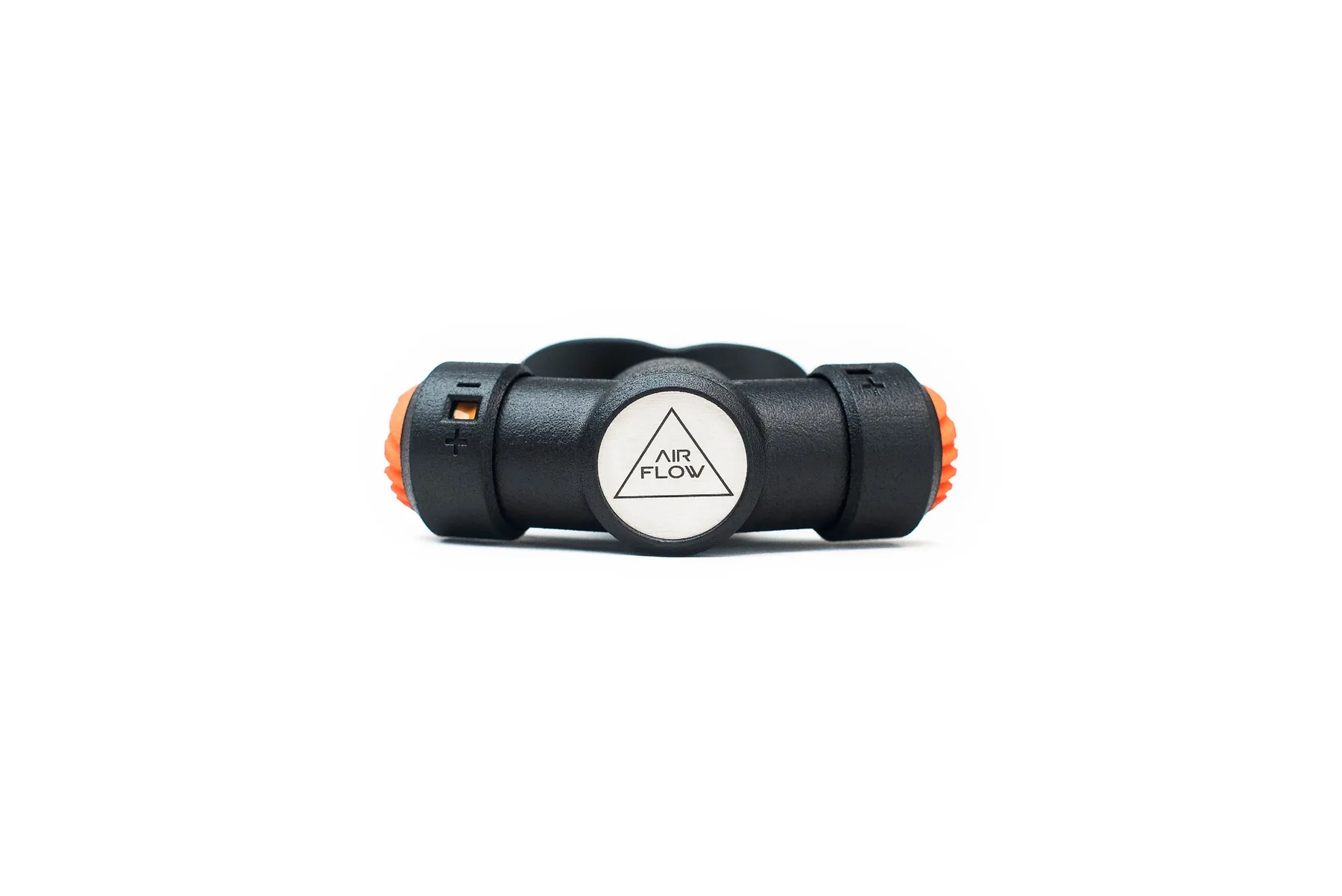
AirFlow Classic
Ein über den Mund verwendetes Atemwiderstandsgerät mit unabhängig einstellbarem Ein- und Ausatemwiderstand.
Im Workshop lernen die Teilnehmer*innen, wie Prinzipien des Atemwiderstandstrainings in ausgewählte Atem- und Bewegungsübungen integriert werden können.
AirFlow Classic ansehen →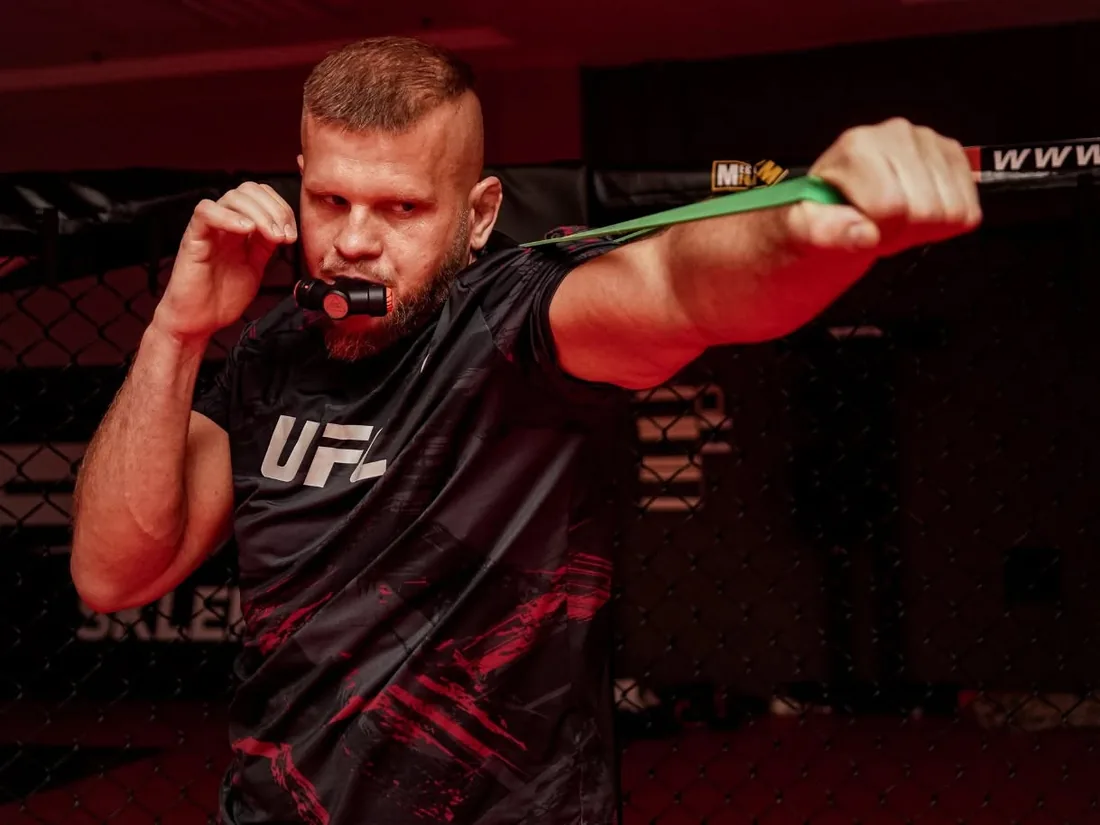
AirFlow Classic in der Wettkampfvorbereitung: Marcin Tybura (UFC) beim einstellbaren Atemwiderstandstraining.
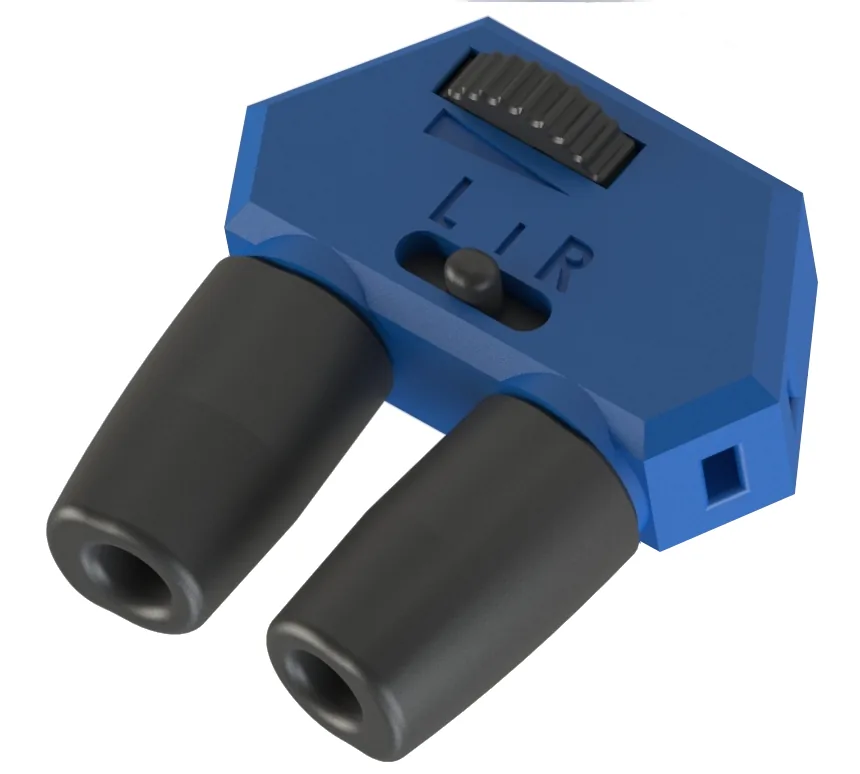
AirFlow Med
Ein kompaktes Nasenatemgerät für Übungen mit Fokus auf Atemwahrnehmung, kontrollierten Luftstrom und regenerationsorientierte Praxis.
Es zeigt, wie nasaler Widerstand schrittweise eingeführt und an das Ziel der jeweiligen Übung angepasst werden kann.
AirFlow Med ansehen →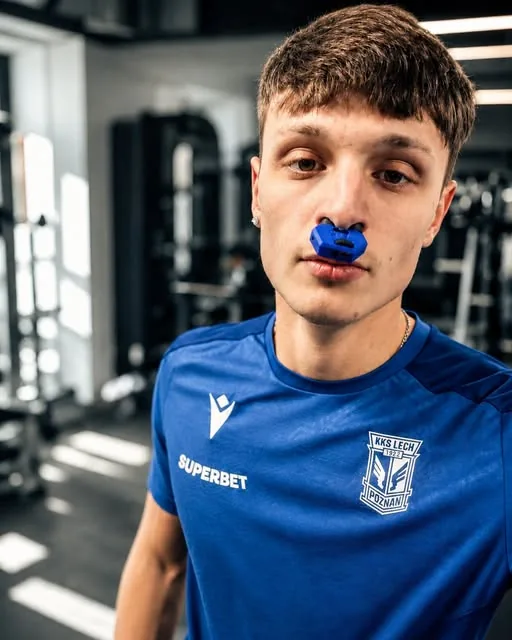
Ein Spieler von Lech Poznań nutzt den AirFlow-Med-Nasentrainer während einer Regenerationseinheit.
Alle Sportler*innen atmen. Jede Sportart stellt andere Anforderungen.
Ambitionierte Amateur- und Profisportler*innen aus Ausdauer-, Team-, Kampf- und Kraftsportarten.
Strength-&-Conditioning-Coaches, Personal Trainer*innen und Fachtrainer*innen, die praktische Werkzeuge für die Atmung einsetzen möchten.
Fachkräfte aus Bewegung, Regeneration und Sport, die ein strukturiertes System suchen.
Menschen, die ihre Atmung verstehen und gezielter in ihr Training integrieren möchten.
Deine Trainer*innen in Wien
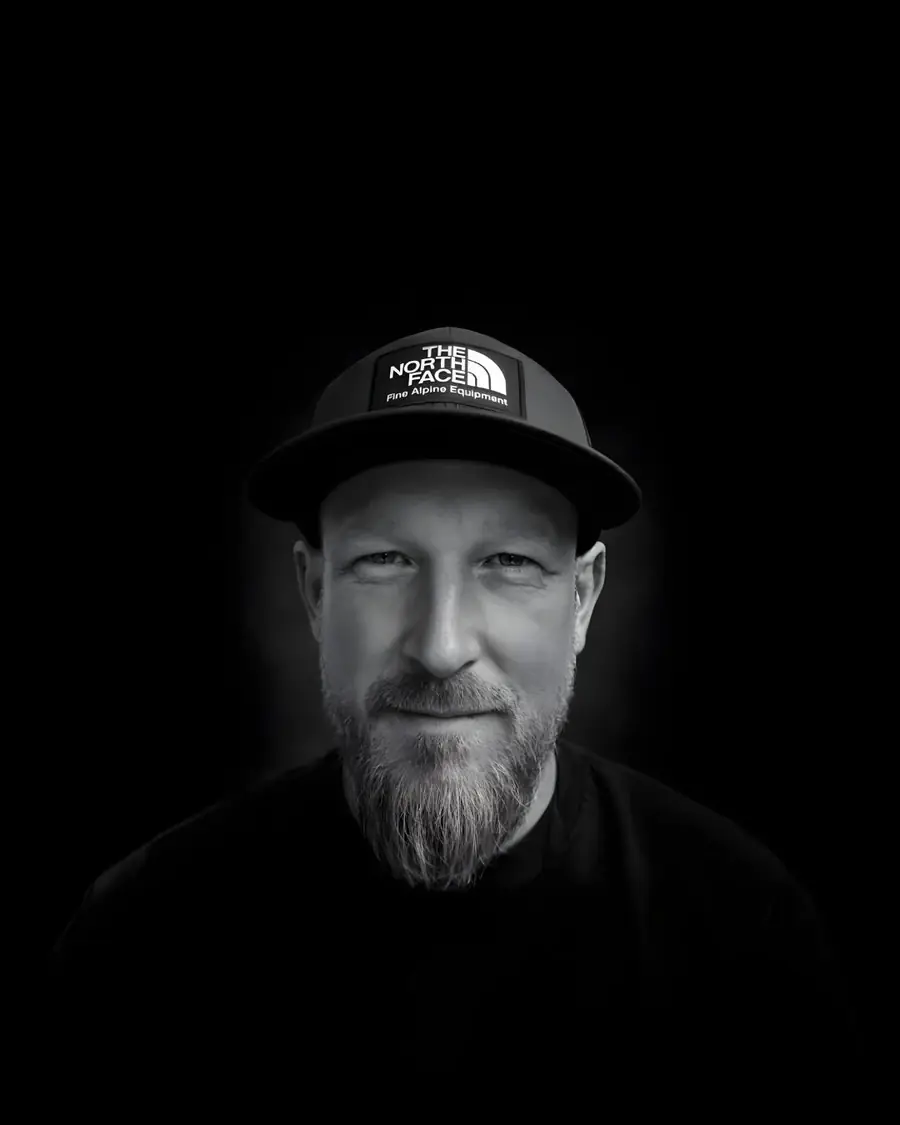
Maciej Szyszka
Respiratory Performance Specialist und Entwickler von Air Flow Performance.
Maciej überträgt Atemphysiologie in praktische Protokolle für Bewegung, Ermüdung, Regeneration und Wettkampfdruck. Sein Hintergrund umfasst ein Physiotherapiestudium, Atem- und Mental-Performance-Coaching, Personal Training, Kampfsport, Krafttraining und Bewegungsschulung.
Nach zehn Jahren intensiven Wing-Tsun-Kung-Fu-Trainings wurde er als Privatschüler von Sifu Kong Chi Keung aufgenommen und setzte seine Entwicklung in Hongkong fort.
Krystian Chmielewski
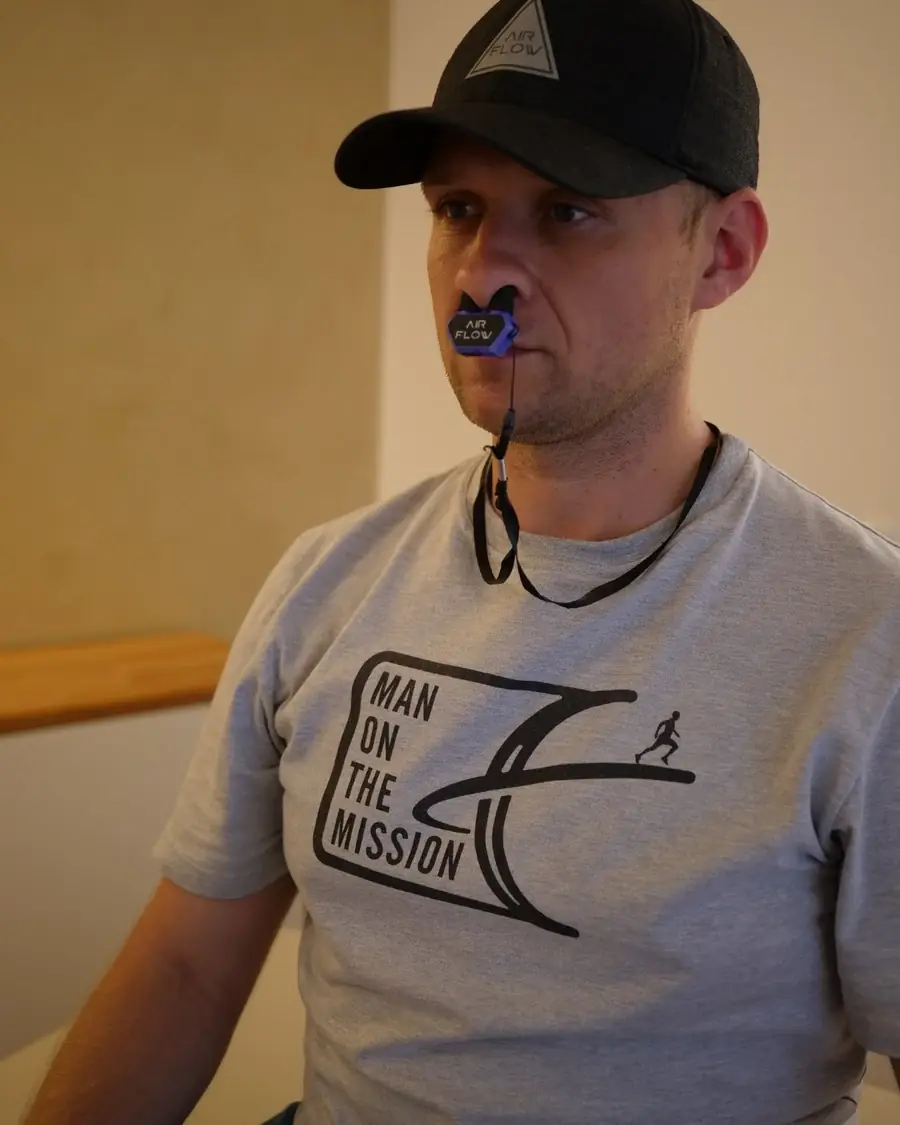
Air Flow Ambassador Austria, Atemcoach und diplomierter Sportmasseur.
Krystian organisiert die Veranstaltung in Wien, unterstützt das praktische Training und steht während des gesamten Workshoptags für deutschsprachige Betreuung zur Verfügung.
Sichere dir deinen Platz in Wien
Ein Ticket umfasst den gesamten Workshoptag mit Theorie und Praxis. Buchung und Bezahlung erfolgen sicher über den deutschsprachigen WooCommerce-Checkout.
Die Hauptsprache des Trainings ist Englisch. Während des Workshops stehen deutschsprachige Erklärungen, persönliche Unterstützung und organisatorische Begleitung zur Verfügung.
Air Flow Performance Tagesworkshop
- Samstag, 10. Oktober 2026
- 10:00–17:00 Uhr
- Theorie und ausgewählte praktische Übungen
- Praktische Trainingsunterlagen
- Wasser, Kaffee und Snacks
- Deutschsprachige Erklärungen und persönliche Unterstützung vor Ort
Traum 14
Hauptstraße 29
1140 Wien, Österreich
Samstag, 10. Oktober 2026:
10:00–17:00 Uhr
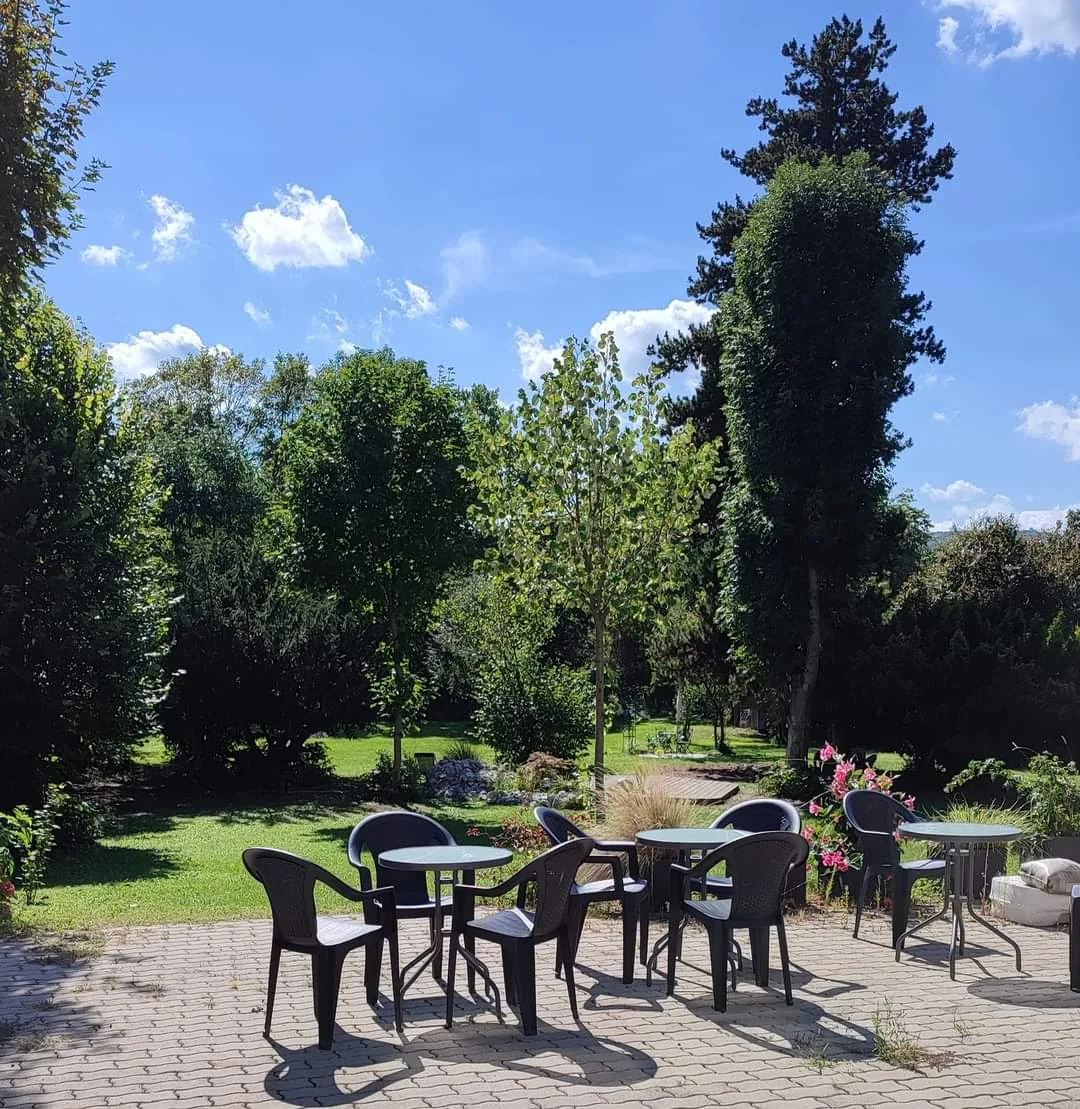
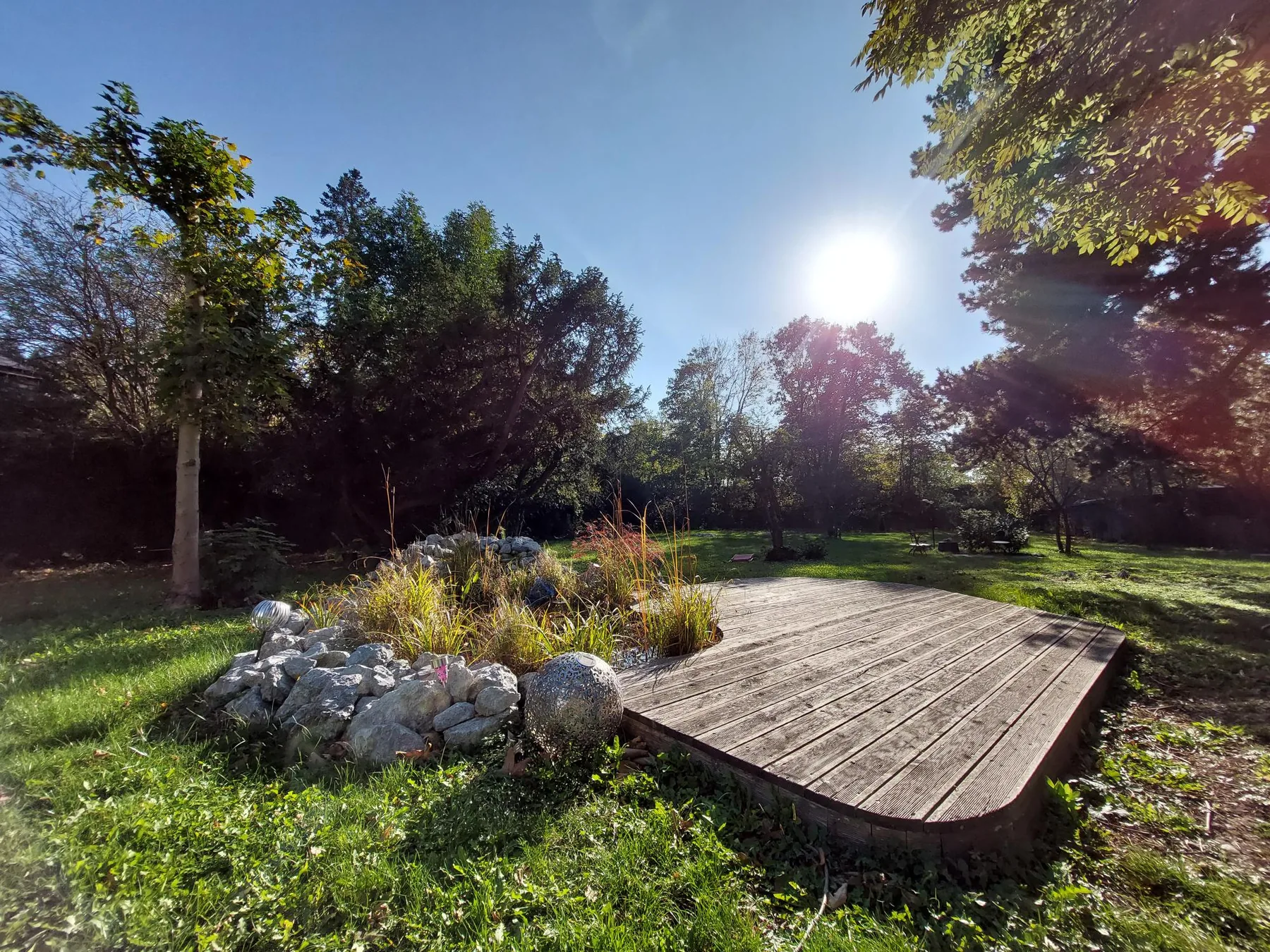
Der helle, großzügige Raum bietet ausreichend Platz für Theorie, Partnerarbeit und praktische Übungen. Bei geeignetem Wetter kann auch der ruhige Garten für Pausen und ausgewählte Übungssequenzen genutzt werden.
Informationen zur Anreise und alle finalen organisatorischen Hinweise werden den angemeldeten Teilnehmer*innen vor der Veranstaltung zugesendet.
Platz sichern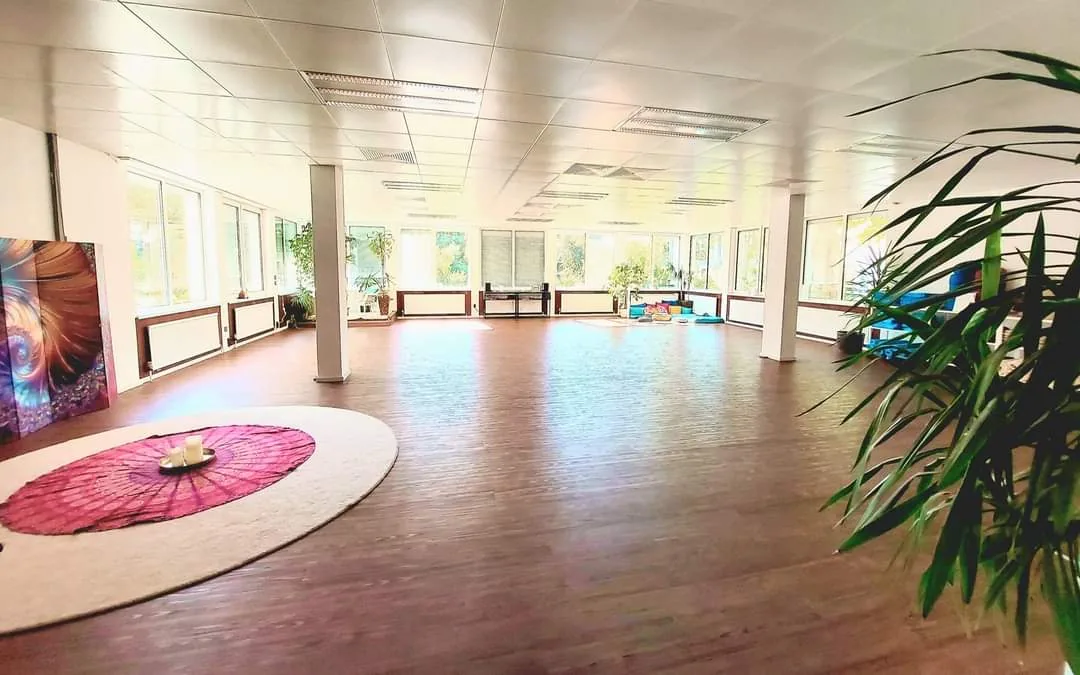
Häufig gestellte Fragen
In welcher Sprache wird das Training durchgeführt?
Die Hauptsprache des Trainings ist Englisch. Deutschsprachige Teilnahme ist dennoch möglich: Während des Workshops stehen verständliche Erklärungen, persönliche Unterstützung und organisatorische Begleitung auf Deutsch zur Verfügung.
Ist die Buchung auf Deutsch möglich?
Ja. Die Landingpage, der sichere WooCommerce-Checkout, der Bezahlvorgang und die automatische Bestellbestätigung sind vollständig auf Deutsch. Das Training wird hauptsächlich auf Englisch durchgeführt, mit deutschsprachiger Unterstützung während des Workshops.
Benötige ich Vorerfahrung im Atemtraining?
Nein. Das Training beginnt mit den Grundlagen und entwickelt sich schrittweise weiter zu Bewegung, körperlicher Belastung und sportartspezifischer Anwendung.
Ist die Veranstaltung nur für Profisportler*innen geeignet?
Nein. Sie eignet sich für ambitionierte Amateur- und Profisportler*innen, Trainer*innen und Performance-Fachkräfte.
Ist ein AirFlow Atemtrainer im Preis enthalten?
Nein. Die Geräte können demonstriert oder bei ausgewählten Übungen eingesetzt werden, sind jedoch nicht im Ticketpreis enthalten.
Sind Essen und Getränke enthalten?
Wasser, Kaffee und Snacks sind enthalten. Mittagessen ist gegen Aufpreis erhältlich.
Kann ich eine Rechnung erhalten?
Ja. Die Rechnungsdaten können während des deutschsprachigen Checkouts eingegeben werden.
Wie körperlich anspruchsvoll ist das Training?
Die Veranstaltung enthält praktische Bewegungs- und Atemübungen, ist jedoch kein Fitnesswettkampf. Die Übungen können an das aktuelle Niveau der teilnehmenden Person angepasst werden.
Was soll ich mitbringen?
Bitte bring bequeme Sportkleidung und eine Trinkflasche mit. Weitere Hinweise zu Ausrüstung oder Vorbereitung erhalten angemeldete Teilnehmer*innen vor der Veranstaltung.
Deine Atmung ist immer Teil deiner Leistung.
Lerne, sie zu beurteilen, zu trainieren und dann anzuwenden, wenn Intensität, Ermüdung und Druck steigen.